Sunrise, Moonrise & the Beach
Ultimate Sunrise & Sunset Guide from Your Future Villa
Golden light on calm Gulf waters, fishing boats at dawn, pine trees framing the horizon. This is what mornings look like when you own here.
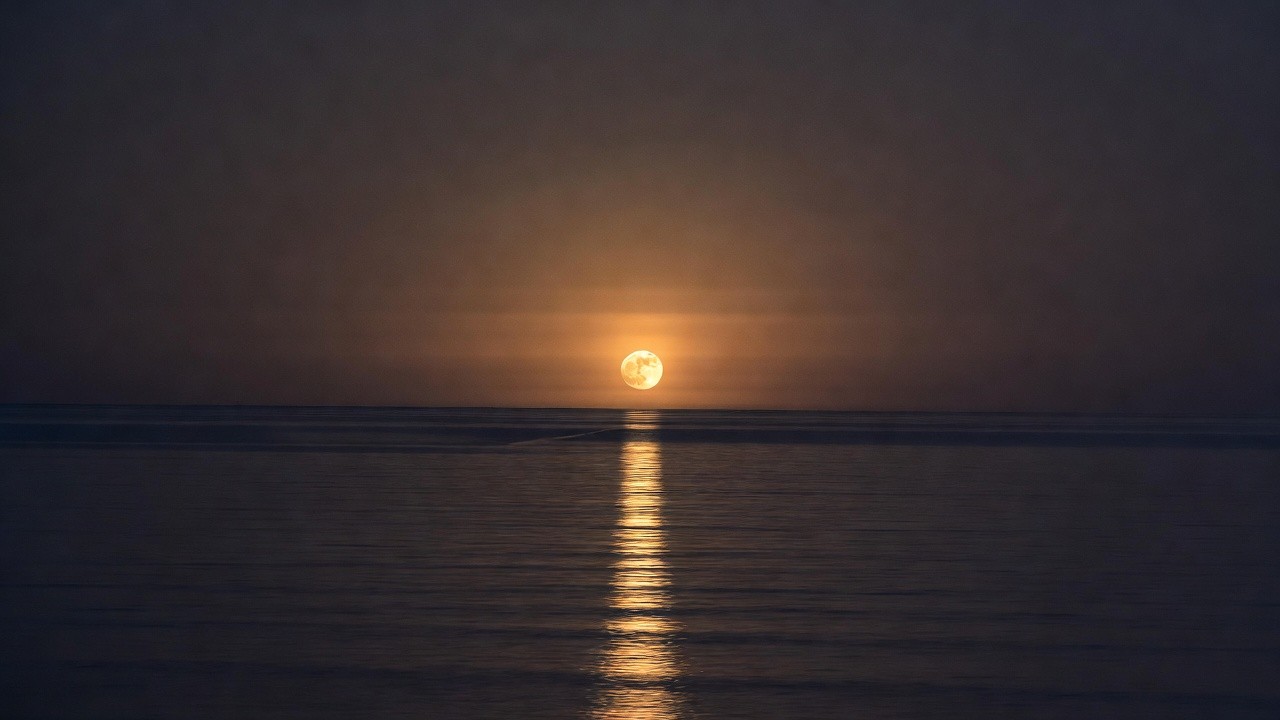
The moon rises due east over the Gulf. The light path leads to you, and only you.
The Gulf is completely flat and the sky is doing something unreasonable with colour.
What Low Tide Means Here
The Gulf of Thailand runs on diurnal tides — one high, one low per day. What that means practically is that the beach you walk onto at 5am can be a completely different place from the beach at midday. At low tide the sand stretches out wide and pale and almost unmarked, the water pulled back to reveal a firm flat surface that goes on further than you expect. The fishing boats sit at odd angles in the shallows. Herons work the exposed sand methodically.
At high tide it's a different calculation. The water comes up to the pine trees, the beach narrows to a strip, and the Gulf looks bigger, closer, more serious. The kite surfers prefer high tide — more water, fewer surprises underfoot. The early morning walker prefers low.
Check the tide before you come down. It changes everything.
The Sunrise
I've taken every sunrise photograph on this site myself. That is not a flex — it's an explanation of why I'm evangelical about being down here before the light comes up.
The Gulf faces east. You are facing directly into the sunrise, nothing between you and the horizon. At 5am the sky above the waterline starts separating from the water — a thin dark line, then a band of deep blue that lifts gradually toward something warmer. The fishing boats are already out, small silhouettes working the middle distance. The pine trees behind you are still completely dark.
Then the orange starts. Not gradually — it arrives, and suddenly the whole sky above the horizon is doing something you want everyone you know to see. Warm orange fading up to peach, then to the clear blue that holds for about twenty minutes before the sun gets high enough to start being just the sun.
Before any of that, though, there are the stars. I make a bulletproof coffee before I leave — proper, with butter, the way you do when mornings are worth taking seriously — and I sit outside in the dark and watch the sky before dawn. The darkness here is real. No ambient glow from anything. Jupiter doing its thing in the south. Sometimes a satellite crossing so slowly it looks like it has somewhere to be and has decided not to rush. Then I get on the bike. Three, four minutes down to the beach. By the time I arrive, the horizon has started doing something.
November through March gives you the most reliable conditions. Calm water, clear air, the sun rising into a sky that hasn't been complicated by humidity yet.
No Sunset — But Something Better
The beach faces east. The sunset happens behind you, inland, and you don't see it directly. What you do see — and this took me a while to appreciate — is the light it leaves behind.
As the sun drops behind the hills to the west, the sky above the Gulf starts shifting. The water goes from the flat blue of afternoon to something more complicated — gold first, then a pink that deepens, the whole horizon changing colour every few minutes. You're not watching the sun go down. You're watching what the departing light does to everything east of it. It's different. Better, arguably.
The Moonrise
This is the thing I tell people about and they don't fully believe until they've seen it.
The moon rises in the east, over the Gulf. When the timing is right — a full moon, clear sky, the right time of year — you get what I can only describe as a second sunrise. The horizon brightens. A warm amber glow builds above the waterline. And then the moon comes up enormous, doing exactly what the sun did at 5am but now at 9pm, with the Gulf flat and black below it.
And then something strange happens.
A strip of light appears on the water. Narrow at first, then widening as the moon climbs — a pathway of silver leading directly from the horizon to exactly where you're standing. Not to the beach in general. To you, specifically.
This is not a feeling. It's physics. The moon's reflection on moving water is directional — each ripple acts as a tiny mirror angled toward your eye and only your eye. The strip of light is real, and it belongs to you. If you look down the beach at another couple standing fifty metres away, they are in complete darkness. Their moonpath exists too, leading to them, but you cannot see it from where you stand. For you, they are standing in shadow. For them, the Gulf is lit up, the light coming straight to them, and you are the one in darkness.
Everyone on the beach is illuminated. Nobody can see anyone else's light.
I've never found a better argument for being here than that.
Afternoons Are For the Water
After about 9am the sun means business. The beach in the middle of the day is not the place to be unless you're in the water. By early afternoon the kite surfers appear — the wind picks up reliably off the Gulf and the conditions are some of the best in Thailand. Serious riders, proper equipment, the kind of flying that attracts competitors from across Southeast Asia.
If you don't kite, there is still good reason to be near the water. The seafood market at the base of Khao Kalok opens early and finishes whenever it finishes. The fishermen come in, the catch goes straight onto the grill, you eat at plastic tables with the Gulf twenty metres away. This is a better lunch than anything in Hua Hin.
How to Get There From the Villa
Three to four minutes by motorbike or bicycle. The road is flat, there is almost no traffic before 7am, and the ride back after sunrise — coffee wearing off, stomach beginning to ask questions — is one of the better parts of the morning.
Pran Four Villas sits 1.6 kilometres from the beach. You will use that road more than you expect.